
Why Is My Metabolism So Slow?
You’re eating “normal.” You’re not overeating like before. But still, the scale barely moves—or it goes up for no clear reason. It feels like your body is working against you, even when you’re trying your best.
And that’s where most people start asking the same question: Why is my metabolism so slow? You’re not imagining it. When your metabolism slows down, your body burns fewer calories even at rest, which means weight loss suddenly feels harder than it should be.
The frustrating part is that this doesn’t happen overnight. Things like long-term dieting, poor sleep, stress, and even skipping meals can quietly slow your metabolism over time. In fact, research shows that repeated low-calorie dieting can make your body adapt by conserving energy instead of burning it—basically putting you in “energy-saving mode.”
But here’s the important part: a slow metabolism is not permanent, and it’s definitely not random. There are real, science-backed reasons behind it—and once you understand them, you can actually start reversing the pattern.
In this blog, you’ll learn exactly what slows down your metabolism, why it happens in the first place, and what you can realistically do to speed it back up without extreme diets or confusion.
Why Is Your Metabolism So Slow? (And Why It Feels Impossible to Fix)
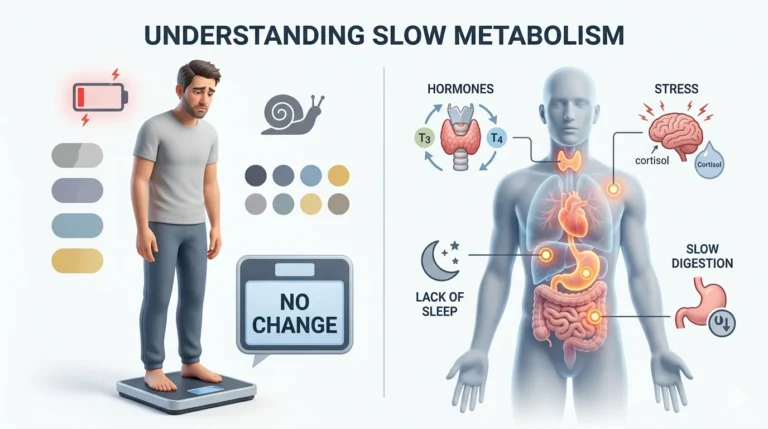
When your metabolism slows down, it doesn’t just affect weight—it changes how your entire body feels and responds. You may notice low energy, constant fatigue, and stubborn weight that refuses to move no matter what you try.
The reason it feels “impossible to fix” is because your body is adapting in the background, not just reacting on the surface. Metabolism isn’t broken—it’s responding to signals like stress, diet habits, and sleep quality.
The more these signals stay unbalanced, the more your body shifts into energy-saving mode, making fat loss slower and more frustrating over time.
You’re Eating Less but Still Gaining Weight — What’s Going On?
If you’re eating less but still gaining weight, your body may have adapted to prolonged calorie restriction. When you consistently eat too little, your metabolism can slow down as a survival response, meaning your body starts burning fewer calories than before.
This is why the scale may not reflect your efforts. On top of that, your body can retain water, increase hunger hormones, and reduce daily energy expenditure without you realizing it.
So even though you think you’re in a calorie deficit, your metabolism may have adjusted downward, making fat loss feel completely stuck.
The Hidden Biological Reasons Your Body Slows Down Fat Burning
Several internal biological factors quietly control how fast your body burns fat. Hormones like cortisol (your stress hormone), insulin, and thyroid function all play a major role in metabolic speed.
High stress, poor sleep, and irregular eating patterns can disrupt these systems, signaling your body to conserve energy instead of burning it.
Over time, this leads to reduced calorie burning even at rest. In simple terms, your body isn’t refusing to lose weight—it’s trying to protect itself based on the signals it’s receiving. Understanding these hidden triggers is the first step to reversing the slowdown naturally.
What Exactly Is Metabolism (And Why It Matters for Weight Loss)
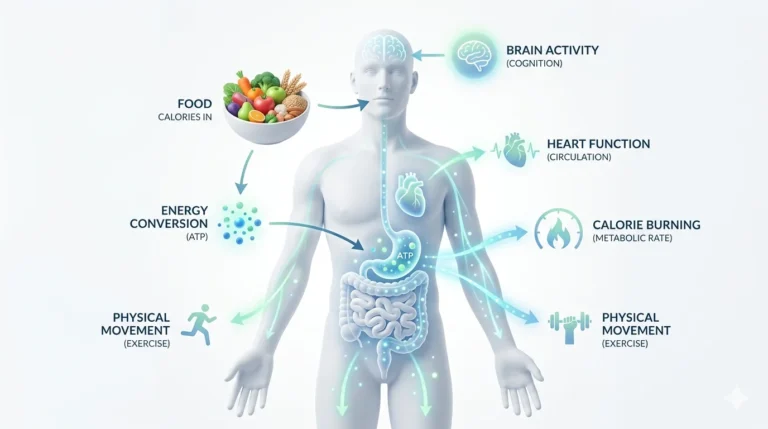
Metabolism is the process your body uses to turn food into energy. It’s not just about weight loss—it controls how your body functions every single second, from breathing to digesting food and even thinking.
When your metabolism is healthy, your body efficiently burns calories and maintains balance. But when it slows down, everything feels harder, especially fat loss.
That’s why understanding metabolism is so important. It’s basically the “engine” of your body, and the speed of that engine decides how quickly or slowly you burn energy throughout the day.
Your Metabolism Explained in Simple Words
In simple terms, your metabolism is like your body’s internal power system. Every time you eat, sleep, move, or even sit still, your body is using energy.
That energy use is your metabolism in action. It’s not one single process but a combination of many functions working together.
Some people naturally burn energy faster, while others have a slower rate due to genetics, lifestyle, or habits. But the key thing to understand is that metabolism is not fixed—it responds to how you live, eat, and take care of your body daily.
Basal Metabolic Rate (BMR) — The Calories You Burn Without Doing Anything
Your Basal Metabolic Rate, or BMR, is the number of calories your body burns just to keep you alive. Even if you stayed in bed all day doing nothing, your body would still burn calories to support vital functions like breathing, heartbeats, and brain activity.
BMR makes up the largest part of your total daily energy use. Factors like age, muscle mass, and hormones influence it.
If your BMR is low, weight loss becomes slower because your body naturally burns fewer calories at rest, even before adding exercise or daily activity.
7 Real Reasons Your Metabolism Is Slowing Down
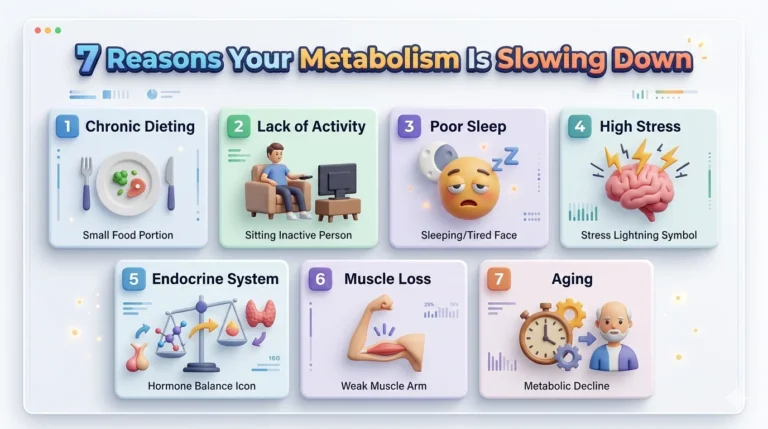
1. Chronic Dieting and Calorie Restriction
Eating too little for too long signals your body to conserve energy. Your metabolism slows down to protect you, making fat loss harder even when you’re putting in more effort than ever.
2. Lack of Physical Activity
When you move less, your body burns fewer calories. A sedentary routine reduces overall energy use, which gradually slows your metabolism and makes weight gain easier over time.
3. Poor Sleep Quality
Lack of sleep disrupts hormones that control hunger and energy use. When your sleep suffers, your metabolism slows, cravings increase, and your body holds onto fat more easily.
4. Stress and High Cortisol Levels
Chronic stress raises cortisol (your stress hormone), which tells your body to store fat and burn less energy. Over time, this creates a slower, more resistant metabolism.
5. Hormonal Imbalances
Hormones like thyroid and insulin regulate metabolism. When they’re out of balance, your body struggles to burn calories efficiently, leading to slower fat loss and stubborn weight gain.
6. Muscle Loss Over Time
Muscle burns more calories than fat, even at rest. When you lose muscle due to inactivity or aging, your metabolism naturally slows down, reducing your daily calorie burn.
7. Aging and Natural Metabolic Decline
As you age, your metabolism gradually slows. Factors like hormonal changes, reduced muscle mass, and lower activity levels all contribute to burning fewer calories than before.
Signs Your Metabolism Is Slower Than Normal
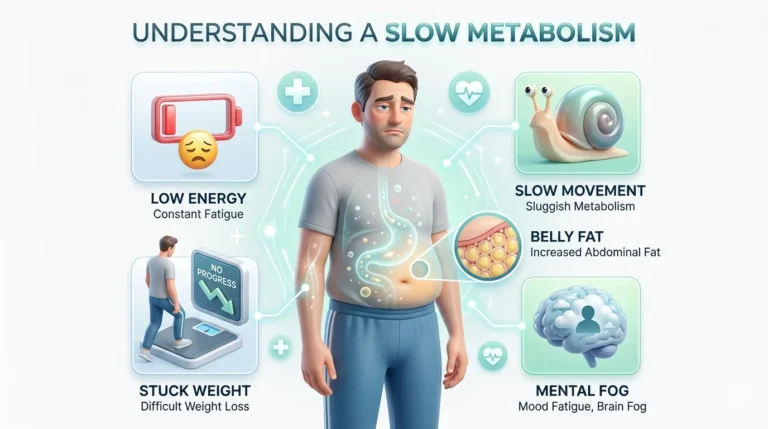
Constant Fatigue and Low Energy
One of the earliest signs of a slow metabolism is feeling tired all the time, even when you’re getting enough rest.
Your body isn’t producing and using energy efficiently, which leaves you feeling drained throughout the day.
Simple tasks start to feel exhausting, and you may notice a lack of motivation to move or exercise.
This constant fatigue isn’t just about sleep—it’s often your metabolism struggling to keep up with your body’s energy needs.
Weight Gain Even With Healthy Eating
You might be eating balanced meals, avoiding junk food, and still seeing the number on the scale go up. This can feel confusing and frustrating.
When your metabolism slows down, your body burns fewer calories than expected, even with healthy eating habits.
So instead of using food for energy, your body may store more of it as fat. Over time, this leads to gradual weight gain that doesn’t match your effort or lifestyle changes.
Key Insight: A slow metabolism can make “healthy eating” feel ineffective because your body isn’t burning calories the way it should.
Difficulty Losing Even Small Amount of Fat
Even small fat loss can feel like a huge challenge when your metabolism is slow. You may try different diets, increase your activity, and still see little to no progress.
This happens because your body has adapted to conserve energy, making fat burning less efficient. Instead of responding quickly to your efforts, your body resists change. This is why weight loss plateaus are so common—and why understanding your metabolism is crucial before making further adjustments.
How to Naturally Reset and Speed Up Your Metabolism
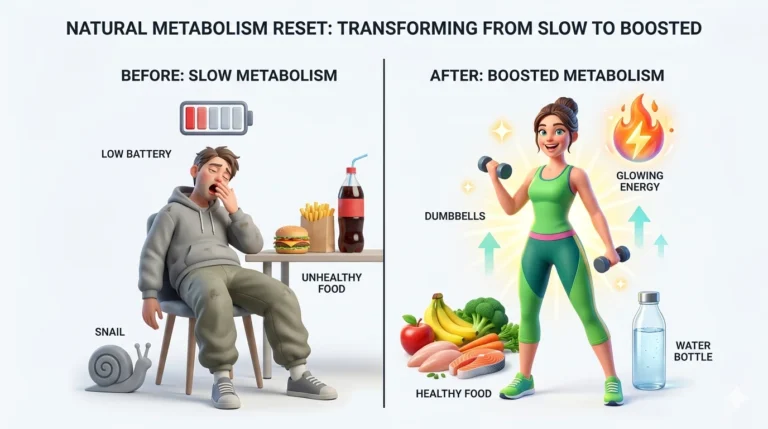
Resetting your metabolism doesn’t require extreme diets or unrealistic routines. It’s about sending the right signals to your body so it feels safe to burn energy again instead of storing it.
Small, consistent changes in how you eat, move, and recover can gradually bring your metabolism back to a healthier state.
Eat More Protein to Boost Calorie Burn
Protein plays a powerful role in metabolism because your body uses more energy to digest it compared to fats and carbs. This is called the thermic effect of food.
When you include protein-rich foods like eggs, chicken, or legumes in your meals, your body naturally burns more calories during digestion.
Protein also helps you stay full longer, which can reduce unnecessary snacking and support better energy balance throughout the day.
Strength Training to Build Muscle Mass
Muscle is one of the biggest drivers of a faster metabolism. The more muscle you have, the more calories your body burns—even at rest.
Strength training exercises like weight lifting or bodyweight workouts help you build and maintain muscle over time.
You don’t need intense sessions every day; even a few consistent workouts each week can make a noticeable difference in how your body uses energy.
Key Insight: Building muscle is one of the most effective ways to increase your resting calorie burn naturally.
Improve Sleep for Hormonal Balance
Sleep directly affects the hormones that control hunger, energy, and metabolism. Poor sleep can increase cravings, slow down calorie burning, and disrupt your body’s natural balance.
When you get 7–8 hours of quality sleep, your body functions more efficiently, making it easier to maintain a healthy metabolism.
Simple habits like reducing screen time before bed and maintaining a consistent sleep schedule can help improve sleep quality.
Manage Stress to Control Cortisol Levels
Chronic stress keeps your cortisol (your stress hormone) levels high, which signals your body to store fat and conserve energy. Over time, this slows your metabolism and makes weight loss more difficult.
Managing stress through activities like walking, deep breathing, or relaxation techniques can help bring cortisol levels down. When your body feels less stressed, it’s more willing to burn calories efficiently instead of holding onto them.
Foods and Habits That Support a Healthy Metabolism
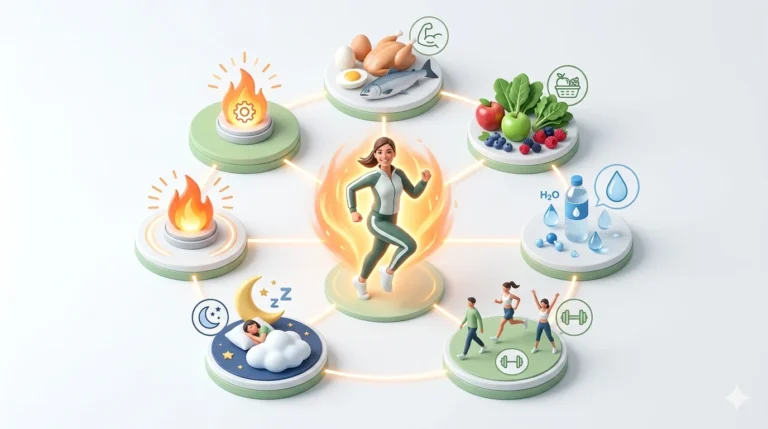
What you eat and how you live each day directly affects how fast or slow your metabolism works. The goal isn’t perfection—it’s consistency.
When you give your body the right nutrients and build simple daily habits, your metabolism becomes more active and efficient over time.
Best Metabolism-Boosting Foods
Certain foods naturally support your body’s ability to burn energy. Protein-rich foods like eggs, chicken, fish, and beans increase calorie burn during digestion.
Fiber-rich foods such as vegetables, fruits, and whole grains help regulate blood sugar and keep your energy stable. Healthy fats from sources like nuts and olive oil support hormone function, which is essential for metabolism.
Staying hydrated is equally important—drinking enough water helps your body carry out metabolic processes more efficiently throughout the day.
Key Insight: A balanced diet with protein, fiber, and healthy fats helps your body burn calories more efficiently without extreme restrictions.
Daily Habits That Keep Your Metabolism Active
Your everyday routine plays a bigger role than you might think. Simple habits like staying physically active, even through walking or light movement, keep your calorie burn steady.
Eating at regular intervals can prevent extreme hunger and energy crashes. Exposure to natural light, maintaining a consistent sleep schedule, and reducing long periods of sitting all support a more active metabolism.
Over time, these small, consistent habits create a strong foundation that helps your body burn energy more naturally and effectively.
Can Supplements Help Your Metabolism? (What You Should Know)
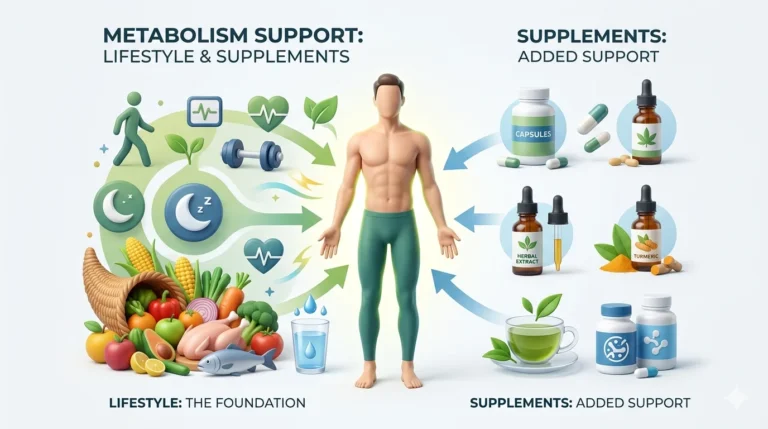
Supplements can support your metabolism, but they’re not a magic fix. Your body still relies on your daily habits—what you eat, how you move, and how well you sleep. Think of supplements as a small boost, not the main solution.
When used correctly, they can help fill nutritional gaps and support processes like digestion, energy production, and fat metabolism. But without a solid lifestyle foundation, their impact will always be limited.
That’s why it’s important to focus on habits first, then consider supplements as an extra layer of support.
Natural Supplements and Their Role in Weight Loss
Some natural supplements are designed to support metabolism by improving gut health, balancing blood sugar, or slightly increasing calorie burn.
Ingredients like green tea extract, probiotics, and certain plant-based compounds are often used for this purpose. They may help your body process food more efficiently and support overall metabolic function.
However, results vary from person to person, and consistency matters more than quick fixes.
If you’re curious, you can explore metabolism-support supplements as part of a broader plan—but they should always complement a healthy lifestyle, not replace it.
Final Thoughts — Your Metabolism Is Not Broken, Just Misunderstood
Your metabolism isn’t “broken”—it’s simply responding to the signals you’ve been giving it over time. When things like stress, poor sleep, low-calorie diets, or inactivity build up, your body adapts by slowing down to protect you. The good news is that this process can be reversed with the right approach.
Start by focusing on one simple change this week—whether it’s improving your sleep, adding more protein to your meals, or staying more active during the day. Small, consistent steps are what gradually bring your metabolism back to a healthier, more efficient state.
If you want to go deeper, check out our detailed guide on how to reset your metabolism naturally to understand the exact steps that can help you see real progress.
Now it’s your turn—which of these signs or habits do you relate to the most?
This article is for informational purposes only and is not a substitute for professional medical advice. Consult your doctor before making changes to your diet, exercise, or supplement routine.
You May Also Want to Read
Frequently Asked Questions
How can I speed up my metabolism?
You can support your metabolism by focusing on simple, consistent habits. Start by eating enough protein, staying physically active (especially strength training), and getting quality sleep. These help your body burn more calories naturally. Managing stress is also important, because high stress can slow down energy use. Instead of extreme diets, focus on balanced meals and regular movement. Over time, these small changes signal your body to burn energy more efficiently.
What is killing my metabolism?
Several everyday habits can slow your metabolism without you realizing it. Eating too few calories for long periods, poor sleep, high stress, and lack of physical activity are common reasons. Losing muscle mass over time also reduces how many calories your body burns at rest. These factors don’t “damage” your metabolism permanently, but they can push your body into energy-saving mode, making weight loss harder.
Can you get rid of slow metabolism?
A slow metabolism isn’t permanent, and in most cases, it can be improved. Your body adapts based on your lifestyle, so when you improve habits like nutrition, movement, sleep, and stress management, your metabolism can gradually recover. The key is consistency, not quick fixes. It may take time, but your body can respond positively when given the right conditions.
Is losing 20 lbs in 5 months slow?
No, losing 20 pounds in 5 months is actually a healthy and sustainable pace. That’s about 1 pound per week, which aligns with most expert recommendations. Slow and steady weight loss is often more effective in the long run because it helps preserve muscle mass and supports a healthier metabolism. Faster weight loss can sometimes lead to muscle loss and metabolic slowdown.
How do I trick my metabolism into burning fat?
You don’t need to “trick” your metabolism. Instead, you need to support it properly. Eating balanced meals, including enough protein, staying active, and avoiding extreme calorie restriction helps your body feel safe to burn fat. Strength training and consistent daily movement also increase your calorie burn. The goal is to work with your body, not against it, so it naturally shifts toward fat burning.
Why is my metabolism so slow even though I workout?
If your metabolism feels slow despite working out, other factors might be involved. You may not be eating enough to support your activity level, which can cause your body to conserve energy. Poor sleep, high stress, or lack of strength training can also limit results. Cardio alone isn’t always enough—building muscle plays a key role in increasing metabolism. Looking at your overall lifestyle, not just workouts, can help you identify what’s holding you back.