
Before and After Weight Loss: What Really Changes?
Have you ever looked in the mirror after weeks of trying to lose weight and wondered, “Why don’t I look different yet?” You’re not alone. Before and after weight loss photos can make the transition seem easier and faster, real progress rarely happens overnight
Successful weight loss is more than just a number on a scale or an impressive photo comparison. It includes changes in body shape, waist circumference, clothing fit, energy levels, fitness, and overall health.
Understanding how your weight changes over time can help you recognize progress that you may not notice in your daily life.
Every weight loss journey is different. Starting weight, body composition, eating habits, physical activity, sleep, age, genetics, and other individual factors affect how quickly changes appear.
That’s why comparing your results to other people’s before-and-after photos can create unrealistic expectations.
Most importantly, realistic weight loss takes time. You’ll be making significant progress before you see big changes in the mirror. The number on the scale can fluctuate, and visible changes are often gradual.
This guide explains what realistic weight loss looks like, when you can expect to notice changes, and how you can track your progress beyond just the scale.
What Does Weight Loss Look Like Before and After?
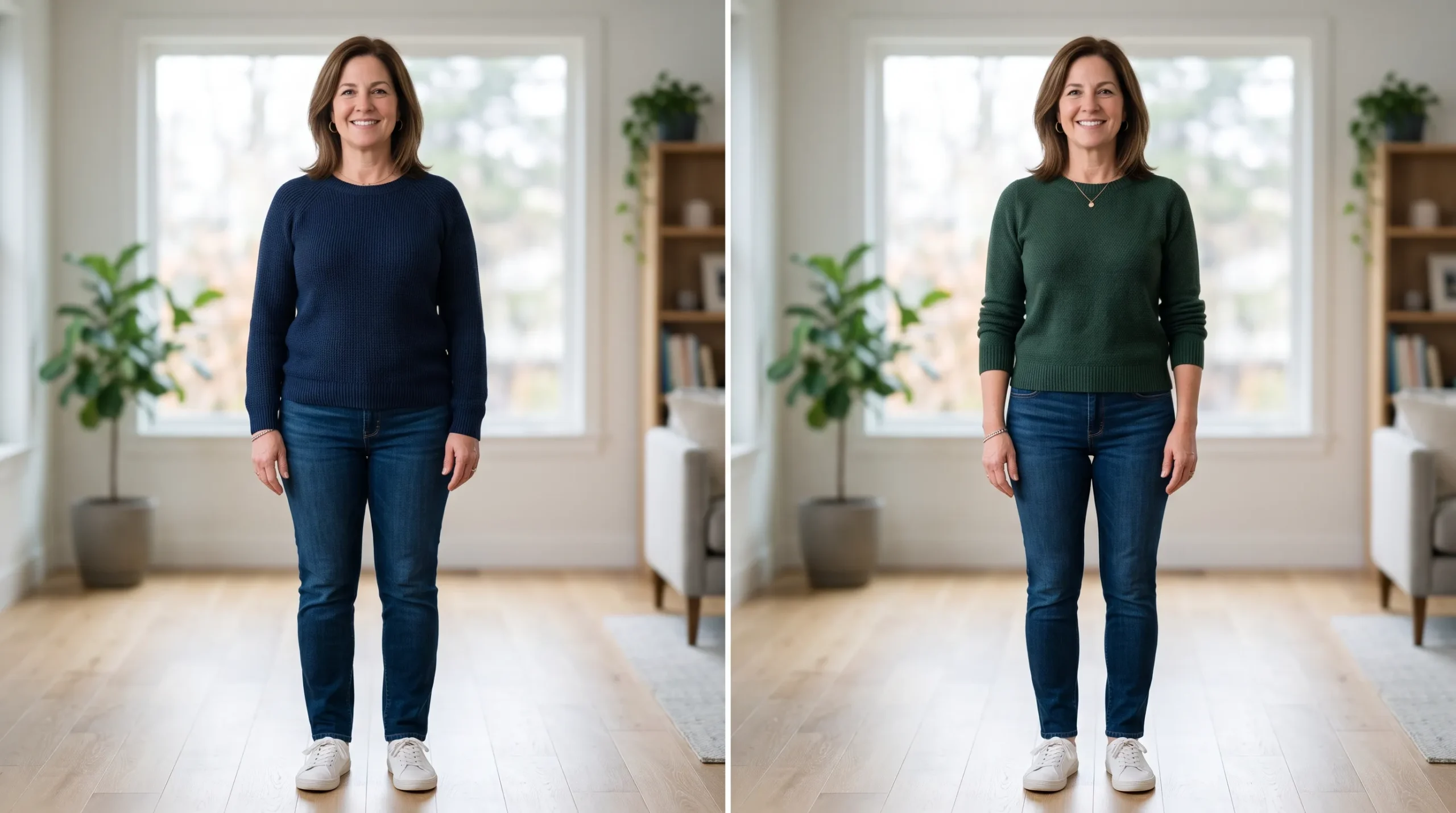
You might step on the scale and be delighted to have lost a few kilos, yet wonder: “Why don’t I see a striking difference in the mirror?” This is because weight loss often happens gradually, and visible changes can manifest in various ways. A “before-and-after” comparison can reveal transformations that easily go unnoticed in day-to-day life.
1. Changes in Body Shape
As you lose body fat, your silhouette may gradually change. Your waist, hips, arms, legs, or midsection might appear more defined, though the way these changes manifest varies from person to person.
2. Changes in Clothing Fit
One of the first signs of progress can be the way your clothes feel. Your trousers might become looser at the waist, your shirts might drape differently, or you might need a smaller clothing size.
3. Changes in Waist Measurements
Tracking your waist measurement can provide useful information beyond the scale. Even when your weight fluctuates, a gradual reduction in waist circumference may indicate physical changes.
4. Changes in Facial Appearance
Some people notice changes in their face as they lose weight, such as a more defined jawline or less fullness in the cheeks. However, the timing of these changes varies significantly.
5. Changes in Physical Activity and Mobility
Weight loss can also make everyday movements easier for some people. Walking, climbing stairs, or performing routine tasks may become more comfortable, reflecting progress that isn’t always visible in the mirror.
When Do You Notice Weight Loss?
You work hard, watch what you eat, and stay active—but when will you actually see a difference? This is one of the most common questions asked during a weight loss journey. The truth is, there is no single timeline that applies to everyone; various factors can influence when changes become noticeable.
1. Starting Weight
Your starting weight can affect how quickly physical changes become visible. Someone with a higher starting weight may notice changes differently from someone who begins at a lower weight. The amount of weight lost also matters when comparing before and after weight loss results.
2. Body Composition
Body composition refers to the amount of fat, muscle, bone, and other tissues in your body. Two people can lose the same amount of weight but experience different visible changes depending on their body composition.
3. Where the Body Stores Fat
Everyone stores body fat differently. Some people may notice changes around their waist first, while others may see changes in their face, arms, legs, or hips. You cannot reliably choose where your body loses fat first.
4. Diet and Physical Activity
Your eating habits and activity level can influence your overall weight loss progress. Consistent, sustainable habits generally matter more than short-term changes.
5. Individual Differences
Age, genetics, sleep, stress, medications, and other factors can affect how your body responds. Focus on your own progress rather than comparing your results with someone else’s weight loss transformation.
Weight Loss Progress Timeline: What to Expect
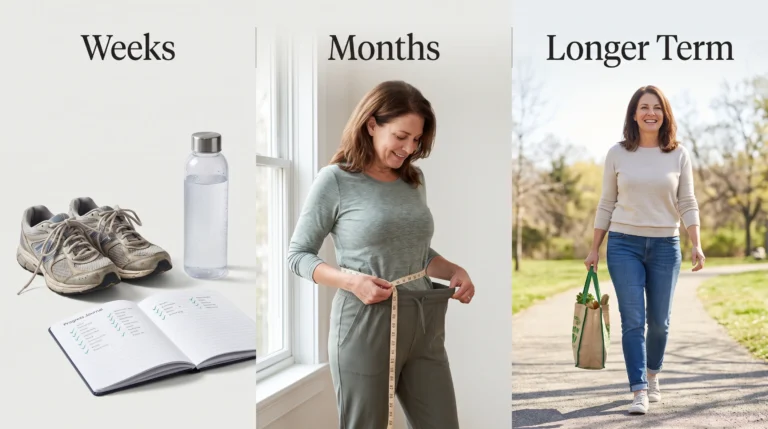
Are you wondering why your weight loss results aren’t as dramatic as you had hoped? One reason might be that tangible changes take time. A weight loss timeline is not a rigid blueprint, as everyone responds differently to changes in diet, physical activity, sleep, and daily habits.
1. First Few Weeks
During the first few weeks, the focus is often on establishing healthier habits. The number on the scale may fluctuate, and initial changes can also stem from variations in the body’s water content. Consistency is more important than expecting immediate, radical change.
2. One - Two Months
After a few weeks of consistently maintaining good habits, you may notice changes in your measurements or the way your clothes fit. Progress photos can also help you spot subtle differences that are hard to detect when looking in the mirror every day.
3. Three – Six Months
If you maintain your healthy habits, the physical changes may become more noticeable. Comparing your weight before and after the weight loss could reveal differences in your silhouette, waistline, or the way your clothes fit.
4. After Six Months
In the long run, healthy habits can lead to more significant changes and greater weight loss. However, results and timeframes vary considerably.
Remember: weight loss rarely follows a perfectly linear path. Focus on sustainable habits and your own journey, rather than comparing your pace to that of others.
Realistic Weight Loss Before and After

Have you ever seen an impressive weight-loss transformation online and thought to yourself, “Why don’t my results look like that?” You might be comparing your own real-life progress to a carefully selected photo—shot with optimal lighting and specific posing—or to a comparison of results achieved over several months. Such a comparison can lead to unrealistic expectations.
Why Social-Media Transformations Aren’t Always Representative
“Before-and-after” photos can be motivating, but they rarely reflect the full weight-loss journey. Lighting, clothing, posture, camera angles, and the choice of shots can make changes appear more dramatic than they actually are.
Realistic Expectations
Healthy weight loss and the resulting physical transformation take time. There is no specific amount of weight that everyone should lose, nor a fixed timeline guaranteeing visible results. Factors such as initial weight, body composition, lifestyle, and individual characteristics play a significant role in this regard.
Gradual Progress
Weight loss generally occurs gradually. Small changes in body measurements, the way clothes fit, physical fitness, or daily habits can eventually add up over time.
Weight Fluctuations and Plateaus
Body weight naturally fluctuates due to factors such as water retention, diet, and physical activity. There may also be periods when weight loss slows down or temporarily stalls; this does not mean you have failed.
Improved fitness, greater mobility, increased energy, or healthier habits are not always visible in a photo. Consider your progress as a whole, and do not focus solely on what a “before-and-after” photo shows.
Why Everyone's Weight Loss Journey Looks Different

Have you ever wondered why two people can follow similar weight-loss programs yet achieve completely different results? If your progress doesn’t look like someone else’s “before-and-after” transformation, it doesn’t mean you’re doing anything wrong. Your body’s response to weight loss depends on a combination of individual factors.
Starting Weight and Age
Initial weight can influence how quickly changes become visible, while age can impact body composition, muscle mass, and the body’s response to changes in diet and physical activity.
Nutrition and Physical Activity
Your diet, just like your physical activity, plays an important role in weight management. The overall quality and quantity of food, as well as regular physical activity, can influence the success of your weight loss.
Sleep and Stress
Sleep and stress can also affect appetite, food choices, energy levels and daily habits. Getting enough sleep and managing stress can make it easier to maintain healthy habits.
Genetics
Genetics can influence factors such as appetite, body composition, fat distribution, and the body’s response to weight-loss measures. This is one of the reasons why physical changes can vary from person to person.
Medications and Certain Health Conditions
Certain medications and health conditions can affect weight, appetite, metabolism, or the ability to lose weight. If you are concerned about the potential impact of a medication or health condition on your progress, consult a healthcare professional.
Your weight loss journey is unique to you. Rather than comparing yourself to the change’s others experience, focus on sustainable habits and progress tailored to your personal situation.
Conclusion
What if the biggest mistake in your weight loss journey wasn’t the method you chose, but expecting your results to be the same as someone else’s? Each body transformation during weight loss is unique, and true progress is not always reflected only in the mirror or on the scale.
Your progress may show up in subtle ways: changes in your figure, reduction in waist size, how your clothes fit you, facial features, physical condition or daily energy level. Factors such as starting weight, age, diet, physical activity, sleep, stress, genetics, medications, and certain health conditions influence how quickly you see changes.
Remember: achieving realistic weight loss results takes time. Weight may experience natural fluctuations, progression may slow, and phases of stagnation may occur. These temporary periods do not necessarily mean that you are failing or that your efforts are in vain.
Instead of focusing only on the time it takes to see visible results, consider the entire process. Track your weight, measurements, progress photos, how your clothes fit, physical improvements and healthy habits over time.
Above all, avoid comparing your own transformation to carefully selected photos on social media. Your body has its own characteristics, its own circumstances and its own rhythm.
This article is for informational purposes only. Consult your doctor before making any health decisions.
You May Also Want to Read
Frequently Asked Questions
1. When do you start noticing weight loss?
Some people notice changes in energy levels or clothing fit within a few weeks, while visible body changes may take longer. The timeline depends on starting weight, nutrition, physical activity, and individual factors.
2. How much weight loss is needed before you see a difference?
There is no single amount that applies to everyone. Changes may become noticeable at different stages depending on body composition, starting weight, fat distribution, and where you track progress.
3. How long does it take to see weight loss results?
Some people notice early changes within a few weeks, but more visible results often take several weeks or months. Progress varies, and daily weight fluctuations can make changes harder to recognize.
4. What changes first when you lose weight?
Early changes may appear in body weight, waist measurements, clothing fit, or physical stamina. The first noticeable change differs from person to person.
5. Does weight loss change your face?
Weight loss can change facial fullness and make features such as the cheeks or jawline appear more defined. The extent of change depends on genetics, age, body composition, and the amount of weight lost.
6. Where do you lose fat first?
Fat loss does not happen in the same order for everyone. Genetics, hormones, and individual fat distribution influence which areas change first. You cannot reliably choose where your body loses fat.